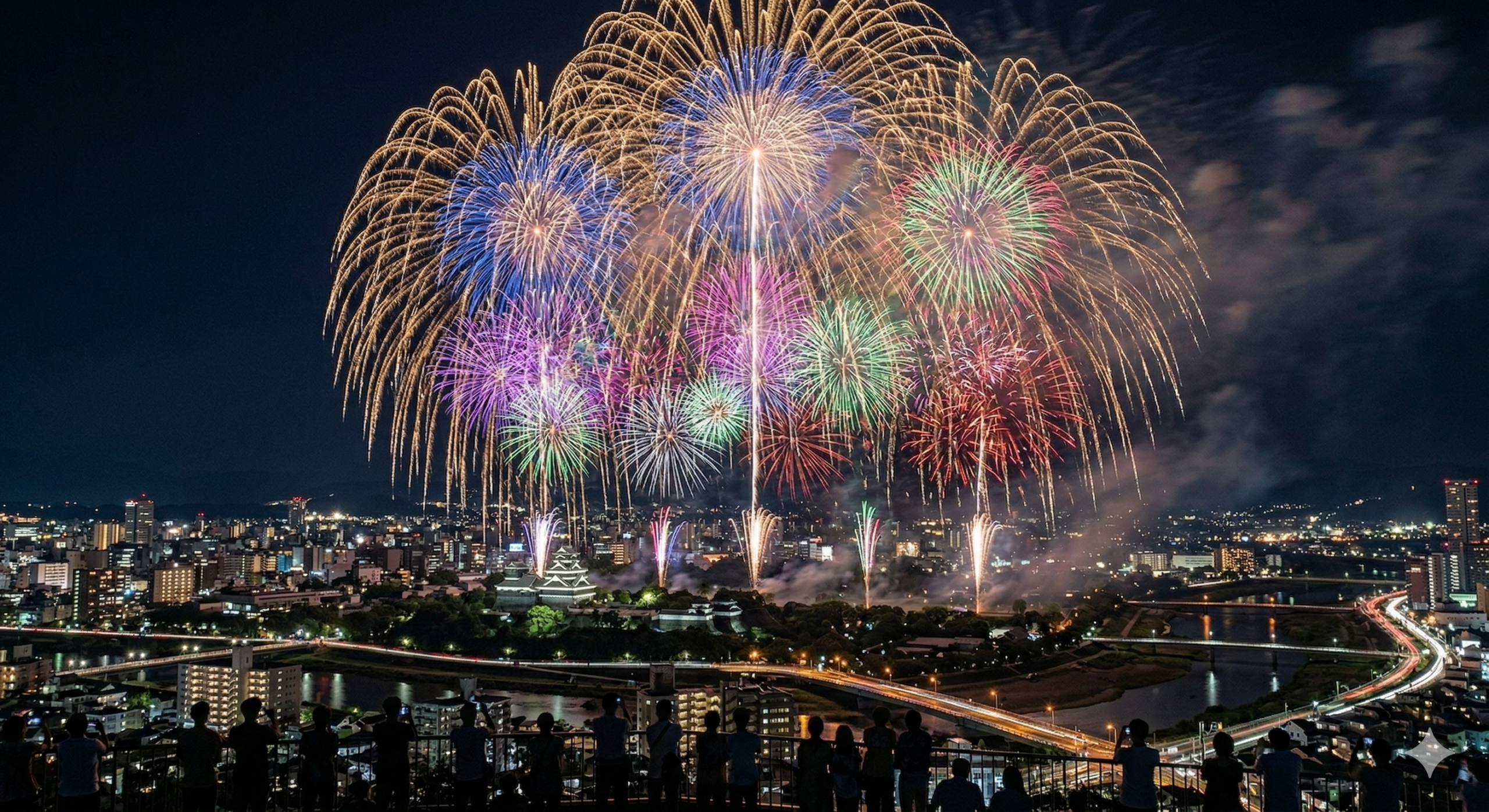
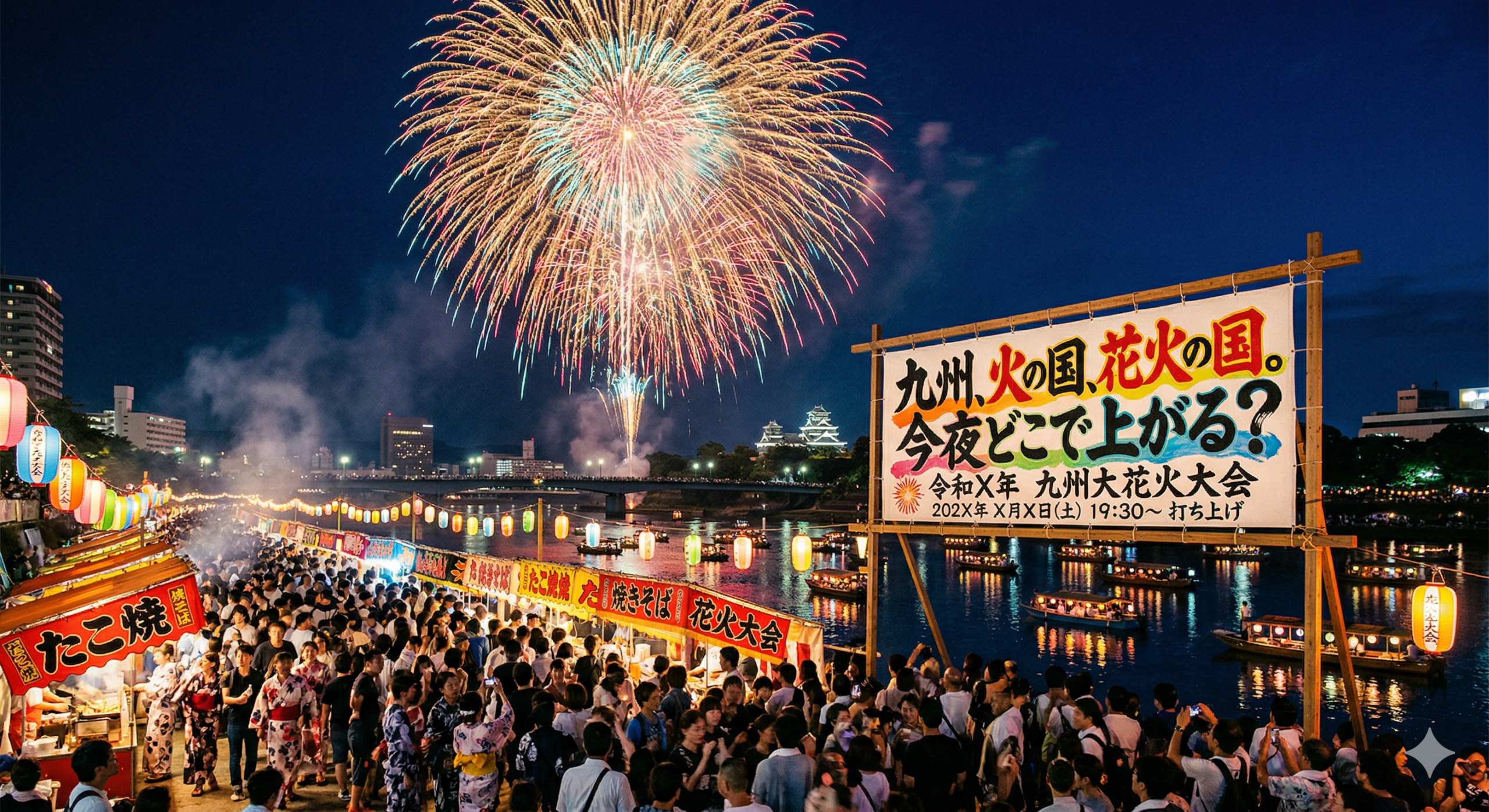
Spot-saving (場所取り, basho-dori) is a real commitment at Japanese fireworks festivals. The biggest shows draw hundreds of thousands of people to a limited riverside or waterfront area, and the best spots are gone hours before any fireworks are lit. Here’s how to think about timing.
By festival size
Major national festivals (500,000+ attendees)
Events like Sumidagawa (Tokyo), Nagaoka, or Tsuchiura: arrive by mid-morning. The prime viewing areas open at a set time (sometimes 6 am, sometimes noon — check the official site), and people queue from well before then. By afternoon the main areas are full. These festivals are a serious logistical operation; treat them that way.
Large regional festivals (100,000–500,000)
Chikugogawa (Kurume), Kanmon Strait, Kagoshima Kinkowan: arrive 2–4 hours before the start for a decent spot, earlier for the best positions along the waterfront. Paid reserved seats are an alternative — book well in advance online.
Mid-size festivals (under 100,000)
Many Kyushu festivals fall here. 1–2 hours before start is usually enough for a good free spot. These are more relaxed events.
What counts as a good spot
- Perpendicular to the launch site, not directly underneath (shells burst outward and high; too close and you’re looking straight up).
- Open sky — trees, bridges, and buildings block the view. Waterfront and riverside spots with open sight lines above are ideal.
- Upwind if possible — smoke drifts downwind and can obscure shells in the second half of the show.
- Not too far back — the boom of a large shell is part of the experience; from too far away you just see light.
Spot-saving rules and etiquette
- Lay out your sheet or rope to mark your area; this is widely accepted.
- Don’t take more space than your group needs — this is considered bad manners.
- Some venues prohibit spot-saving entirely, or only allow it from a specific time. Check the rules for the specific festival.
- Don’t leave your spot unattended for long periods; disputes do happen.
The alternative: skip the spot-saving entirely
A hotel room with a view eliminates the queuing, the heat, the crowds, and the post-show crush — you watch from an air-conditioned room and walk to bed afterwards. It costs more, but for many people it’s the better experience. See our hotel guides for each major festival.
Paid reserved seats are another option at larger festivals — you get a defined space, sometimes with a seat. These sell out fast; look for them on the official festival site or through ticket platforms.
After the show
The biggest crowd management challenge at any large festival is getting home. Station platforms and roads congest immediately after the finale. Options: leave 5–10 minutes early (you’ll miss the very end), wait 30–45 minutes at a nearby bar or convenience store for the rush to clear, or walk a few stops to a less crowded station.
Read next
- Fireworks festivals in Fukuoka & Kyushu: a traveler’s guide
- Will a Japanese fireworks festival be cancelled if it rains?
- How much does a single firework cost in Japan?
※本記事はアフィリエイト広告(楽天・Amazon)を含みます。
あわせて読みたい
花火カレンダー(全国の花火大会日程まとめ) と 花火マップ(開催地マップ一覧) で、気になる花火大会をまとめてチェックできます。