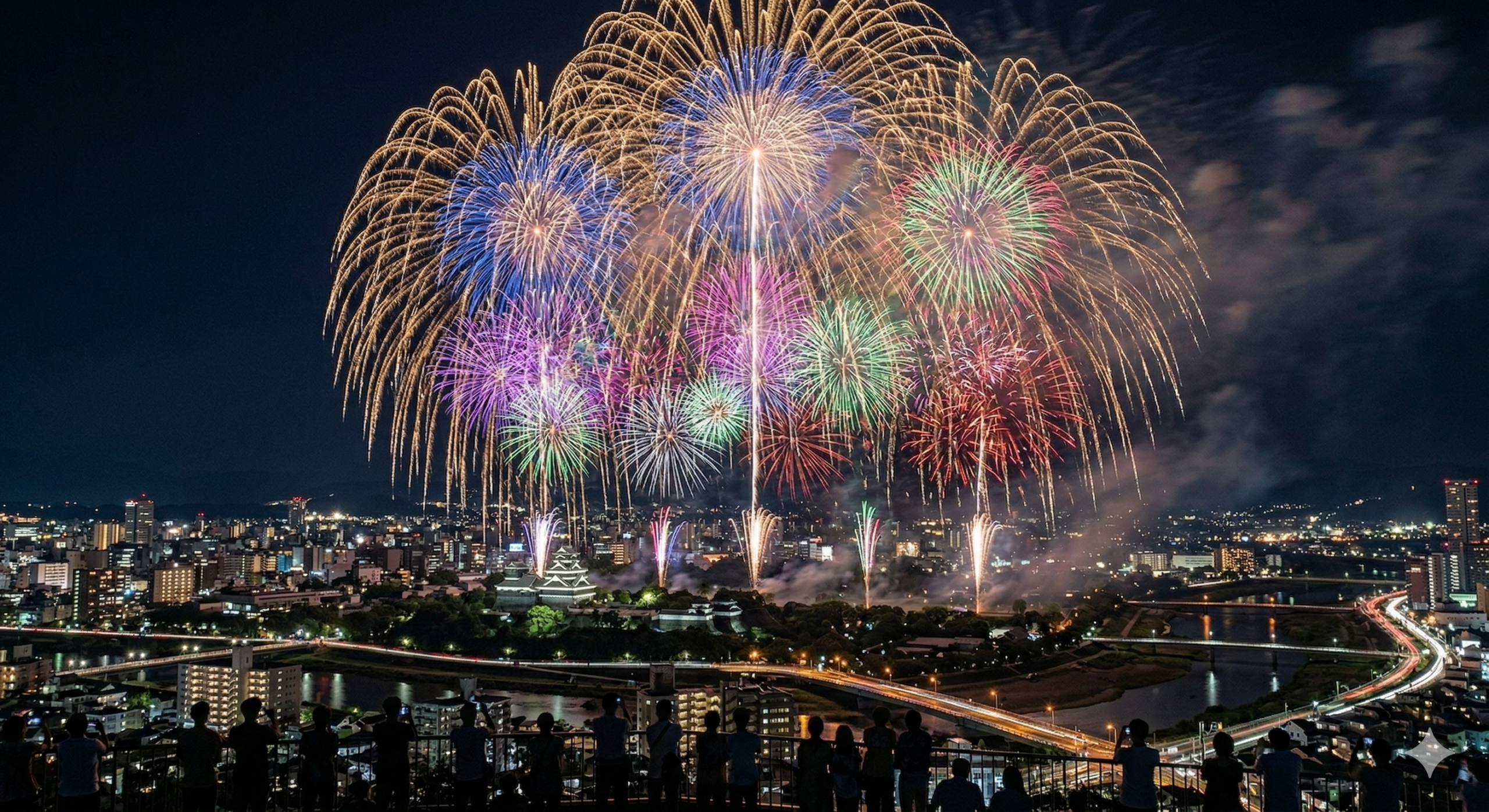
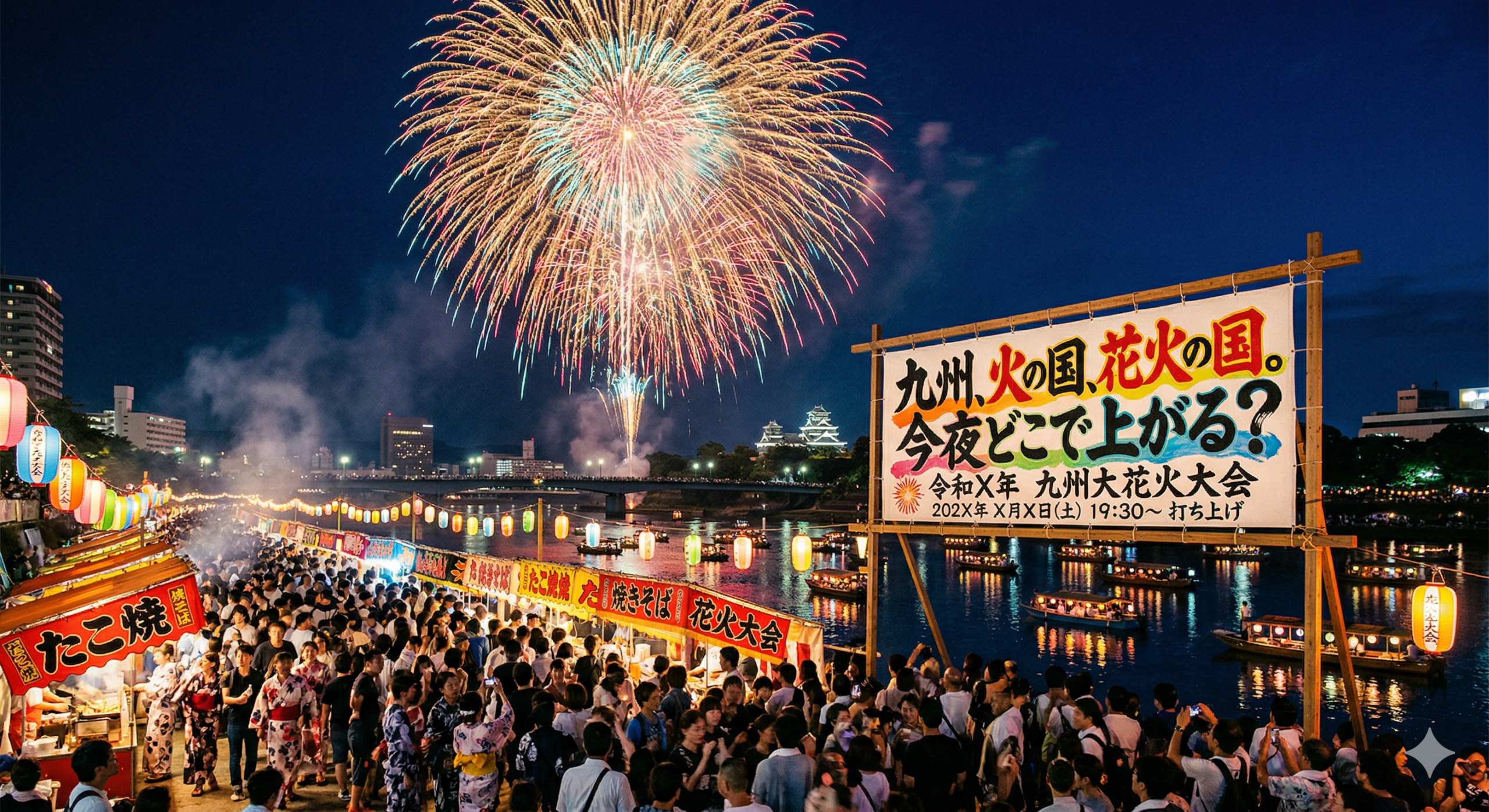
If you are searching for fireworks events in Japan, you will see two terms: hanabi taikai (花火大会) and hanabi matsuri (花火祭り). Both translate loosely as fireworks event, but they describe slightly different things.
Hanabi taikai — the formal fireworks show
Taikai means large gathering or competition. A hanabi taikai is a dedicated fireworks event where the fireworks are the main attraction — a proper scheduled show, usually lasting 60 to 90 minutes, with a set programme.
Characteristics:
- Formal start and end time
- Spectator areas are organised (free zones, paid reserved sections)
- Often associated with river or bay venues with clear viewing lines
- Some are competitive — makers submit shells to be judged on technical merit
- Attendance can be enormous — major shows draw 500,000 to 1 million people
Examples: Chikugogawa Fireworks, Yatsushiro National Fireworks Competition, Sumidagawa Fireworks (Tokyo).
Hanabi matsuri — fireworks as part of a festival
Matsuri means festival in the sense of a community celebration — often with religious or seasonal roots. A hanabi matsuri is a broader event where fireworks are one element among others: portable shrines (mikoshi), bon odori dancing, food stalls, parades.
Characteristics:
- The fireworks may be a highlight but not the only thing happening
- More community-focused; local in scale
- Often associated with a shrine or temple, or with Obon memorial culture
- Atmosphere is generally more relaxed than the big formal taikai
Which is better for visitors?
- If you want to see the most impressive fireworks possible: hanabi taikai, especially a competitive one.
- If you want a broader cultural experience — seeing how Japanese communities celebrate, watching bon odori: hanabi matsuri, especially a local one.
- Many events are both — a traditional summer festival where fireworks have been added as a finale.
Other terms you will see
- Hanabi kyogi taikai (花火競技大会) — a specifically competitive show judged by pyrotechnics experts
- Uchiage hanabi (打ち上げ花火) — aerial fireworks, as opposed to sparklers or ground effects
- Hanabi-shi (花火師) — a fireworks maker; Japan still has traditional craft families
Practical note
When searching for events online, using both terms and the kanji 花火 will catch more results. For specific dates and venue details, always check the official event website — schedules change year to year.
Read next
- Fireworks festivals in Fukuoka & Kyushu: a traveler’s guide
- What to bring to a Japanese fireworks festival
- How early to arrive at a Japanese fireworks festival
※本記事はアフィリエイト広告(楽天・Amazon)を含みます。
あわせて読みたい
花火カレンダー(全国の花火大会日程まとめ) と 花火マップ(開催地マップ一覧) で、気になる花火大会をまとめてチェックできます。