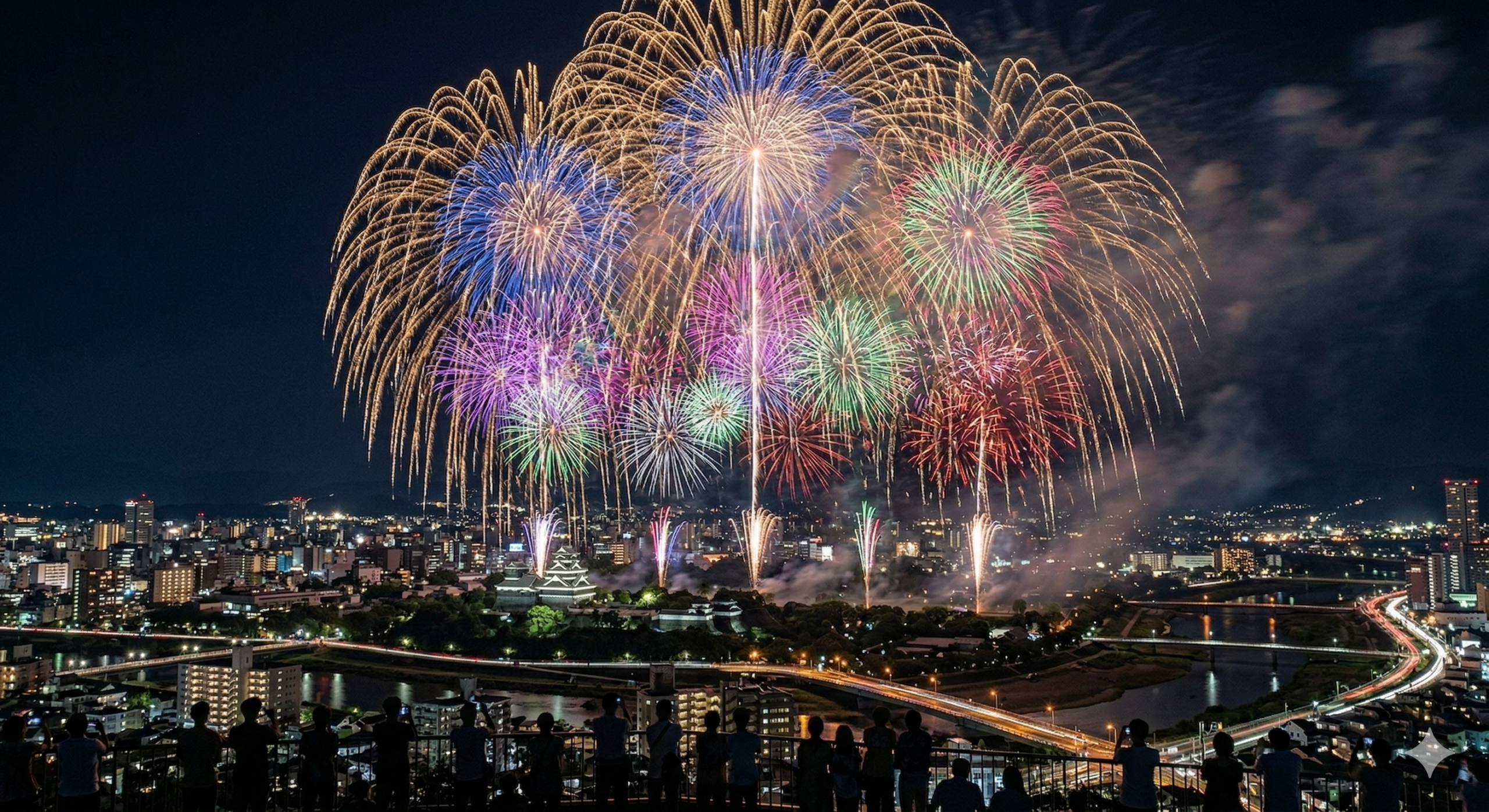
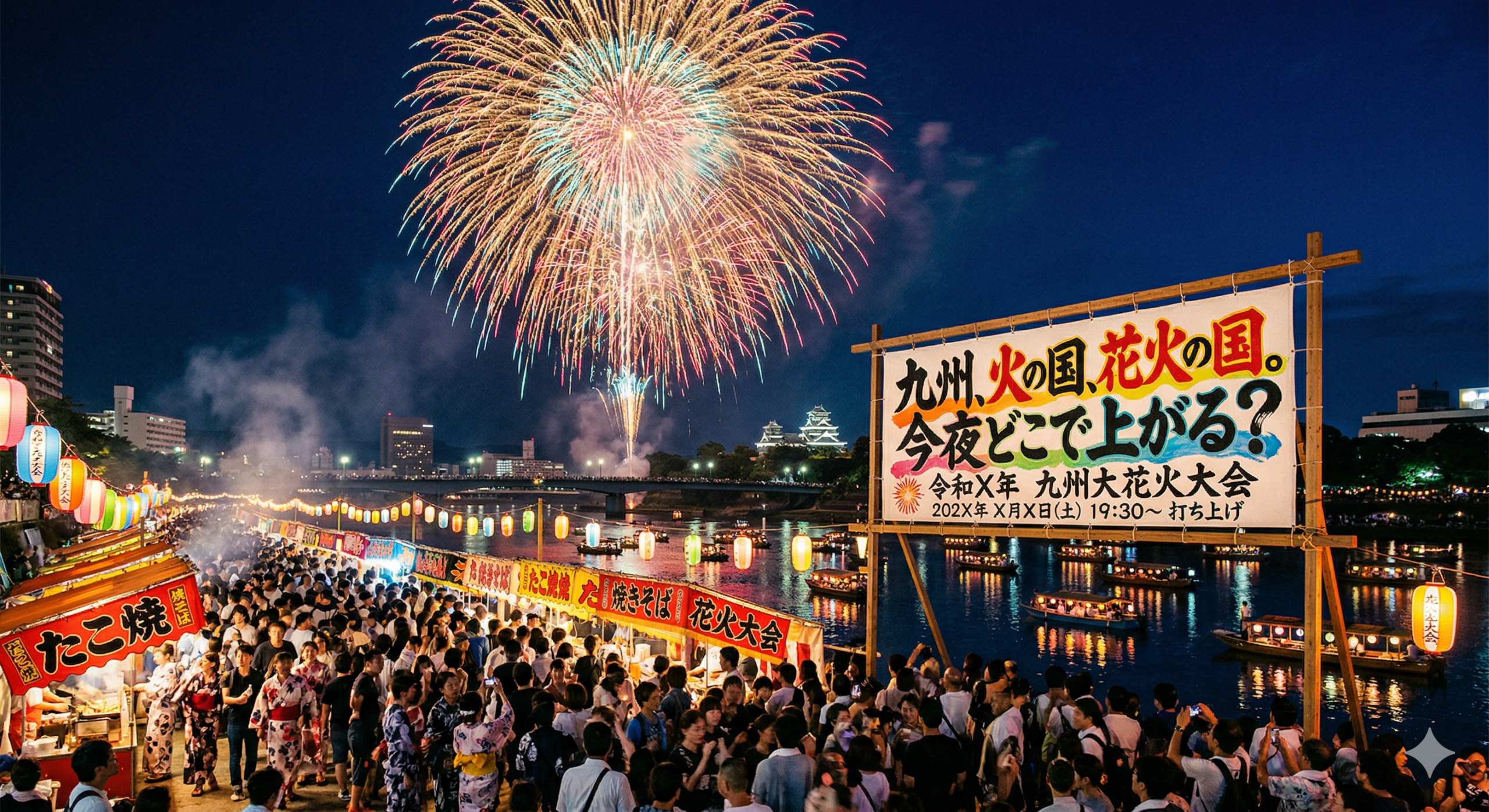
Summer in Japan means hanabi — fireworks. From July through August (and a few in spring and autumn), towns across Kyushu light up the night with festivals that draw huge crowds in yukata, lined with food stalls. If you’re basing yourself in Fukuoka, you’re in a great spot to reach some of the biggest. Here’s a traveler’s guide: what these festivals are, when they happen, the ones worth planning around, and how to do it.
- What is a Japanese fireworks festival?
- When is fireworks season in Kyushu?
- The best fireworks festivals in Fukuoka & Kyushu
- 1. Kanmon Strait Fireworks Festival (Kitakyushu)
- 2. Fukuoka City fireworks (Higashi Ward, Kashiihama)
- 3. Beppu — fireworks over the bay in an onsen town (Oita)
- 4. Sakurajima Art Fireworks (Kagoshima)
- 5. Miyazaki Summer Fireworks (Oyodo River)
- 6. Hita Kawabiraki Festival (Oita)
- 7. Chikugogawa Fireworks Festival (Kurume)
- How to plan your trip
- Tips for visiting a fireworks festival
What is a Japanese fireworks festival?
A hanabi taikai is a summer fireworks festival, usually launched over a river or bay so the bursts reflect on the water. They’re a social event as much as a show: people come early to claim a spot, wear light cotton yukata, and eat their way along rows of food stalls (yatai) selling yakisoba, takoyaki, and shaved ice. Expect big, friendly crowds.
When is fireworks season in Kyushu?
Most festivals run from mid-July to the end of August, with a handful in spring and autumn. Dates for each year are usually fixed only a few months ahead, and some move year to year — always confirm the 2026 date on the official site before you book flights or hotels.
The best fireworks festivals in Fukuoka & Kyushu
1. Kanmon Strait Fireworks Festival (Kitakyushu)
Kyushu’s biggest — around 15,000 shells fired across the narrow Kanmon Strait that separates Kyushu from Honshu, with both Moji (Kitakyushu) and Shimonoseki launching at once. Usually held in mid-August. The Moji side sits next to the photogenic retro port district, near JR Mojiko Station (about a 15-minute walk). Expect very large crowds.
→ Read the full Kanmon Strait fireworks guide
2. Fukuoka City fireworks (Higashi Ward, Kashiihama)
If you’re staying in Fukuoka and don’t want to travel far, the community-run fireworks over Kashiihama (around 7,000 shells) are the easiest to reach, near JR/Nishitetsu Kashii stations. Confirm the 2026 date on the official site.
3. Beppu — fireworks over the bay in an onsen town (Oita)
Beppu pairs summer fireworks over Beppu Bay with Japan’s most famous hot springs — soak, wear a yukata, watch fireworks. It’s the most “Japanese summer” combination on this list.
→ Read the full Beppu fireworks guide
4. Sakurajima Art Fireworks (Kagoshima)
Around 13,500 shells choreographed to music, launched from Marine Port Kagoshima with the active Sakurajima volcano as a backdrop — a genuinely unique setting. Seating is all paid/reserved, so book ahead if you want to go. → Read the full Kagoshima guide
5. Miyazaki Summer Fireworks (Oyodo River)
Around 10,000 shells over the Oyodo River in Miyazaki City, known for its “Niagara” — a curtain of sparks that pours down like a waterfall. Roughly a 20-minute walk from JR Miyazaki Station.
6. Hita Kawabiraki Festival (Oita)
An early-summer river festival in the old castle town of Hita, with around 10,000 shells over the Mikuma River and water events — one of the season’s earliest big shows. Near JR Hita Station.
7. Chikugogawa Fireworks Festival (Kurume)
West Japan’s largest, with a 360-year history and around 18,000 shells over the river — an easy trip from Fukuoka. → Read the full Chikugogawa guide
How to plan your trip
The easiest strategy is to base yourself in Fukuoka (Hakata or Tenjin) and day-trip out. Fukuoka has the most hotels, the main airport, and fast trains and highway buses across Kyushu. Beppu, Kitakyushu (Kanmon), and Hita are all reachable as day or overnight trips; Kagoshima and Miyazaki are better as overnight stays.
Tips for visiting a fireworks festival
- Arrive early. Good spots fill hours before the first shell, especially at the big ones.
- Trains get packed afterward. Thousands leave at once — expect queues, or wait it out at a food stall.
- Wear a yukata if you can — many hotels and rental shops offer them.
- Check for cancellation. Festivals can be postponed for rain or wind; the official site or social media posts updates on the day.
- Bring cash for food stalls.
Festival details (dates, shell counts) are based on recent information and updated for travelers; they change every year. Please confirm the latest schedule on each festival’s official site before you travel.
Read next
※本記事はアフィリエイト広告(楽天・Amazon)を含みます。
あわせて読みたい
花火カレンダー(全国の花火大会日程まとめ) と 花火マップ(開催地マップ一覧) で、気になる花火大会をまとめてチェックできます。