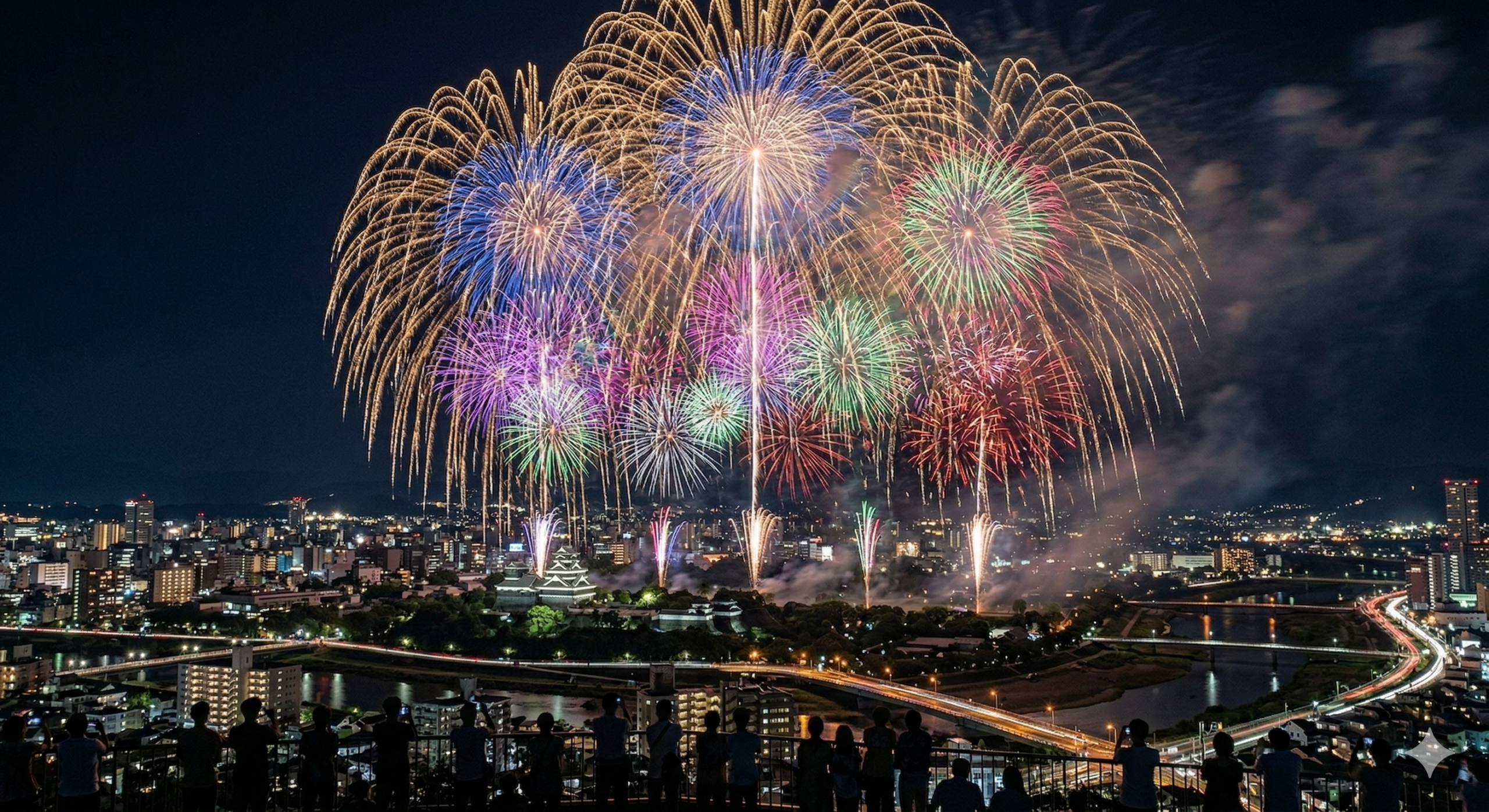
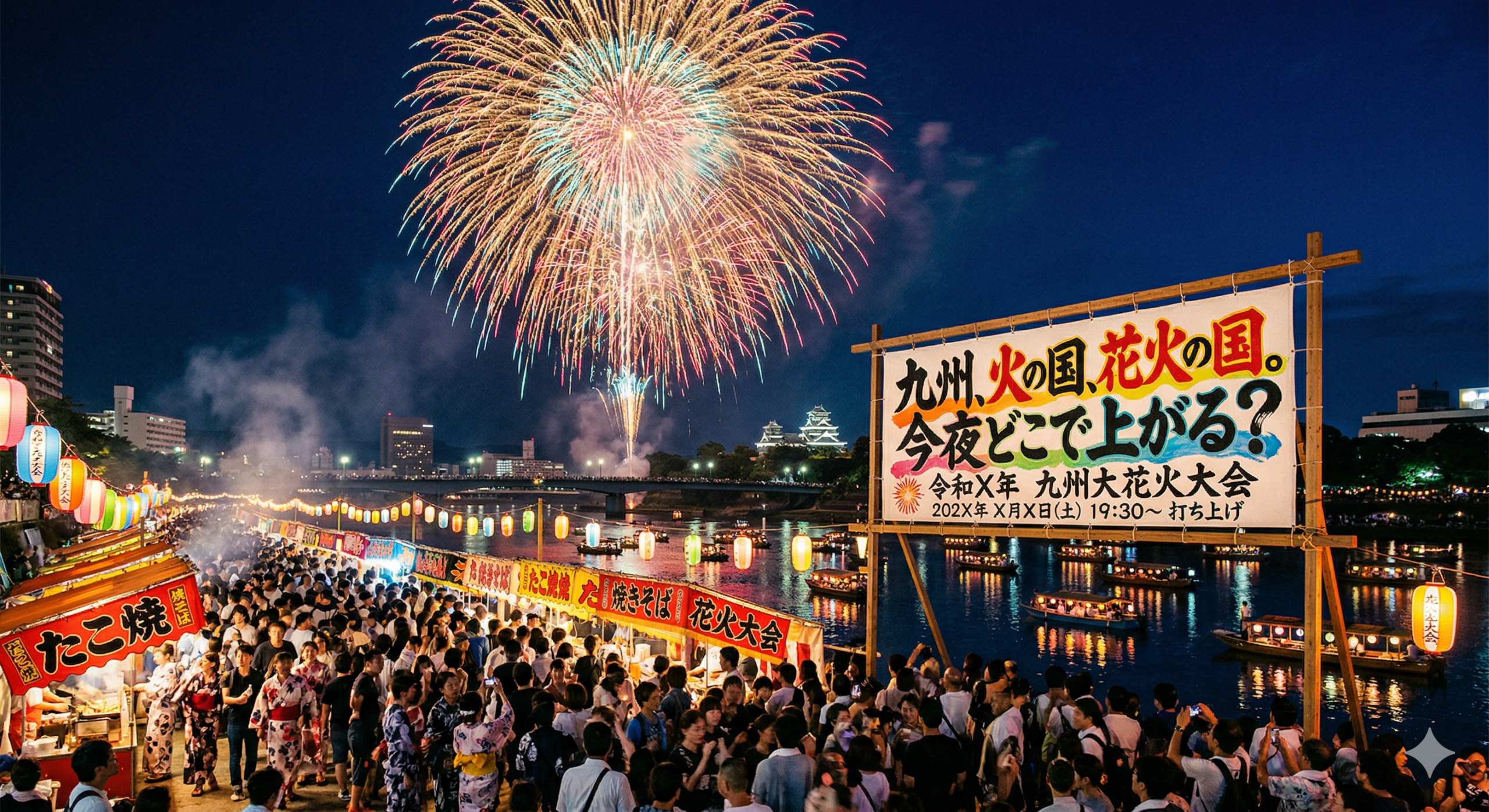
Japanese fireworks festivals (花火大会, hanabi taikai) are outdoor summer events that often mean sitting on the ground for hours before the show starts, in heat and humidity, surrounded by large crowds. Getting your kit right makes a big difference.
The essentials
Picnic sheet (レジャーシート)
Non-negotiable. Most viewing areas are grass or gravel — you’ll be sitting for 1–3 hours before the show. A foldable waterproof sheet is sold at any 100-yen store or convenience store. Get one big enough for your group; the main viewing areas fill up fast and people pack in tightly.
Water and sports drinks
Japanese August evenings are hot and humid. Bring more water than you think you need — venue stalls have queues and sell out. An insulated bottle with ice water is ideal. Sports drinks (like Pocari Sweat or Aquarius) help replace salt lost to sweating.
Mobile battery (モバイルバッテリー)
Networks get congested at large festivals and your phone will work harder than usual. Bring a charged portable battery. Losing your phone’s charge means no photos, no navigation, no way to meet up with friends.
Cash
Most festival stalls (屋台, yatai) are cash-only. ATMs near the venue will have queues. Draw money before you go.
Heat and health
- Mini fan or hand fan (うちわ) — uchiwa fans are sold everywhere near venues; many are free with advertising on them. A battery-powered handheld fan is even better.
- Cooling towel or ice pack — wrap around your neck.
- Sun protection — if arriving early to queue (which you’ll need to for major festivals), you’ll be in direct sun for hours.
- Insect repellent — riverside and waterfront venues have mosquitoes.
- Headache and stomach medicine — just in case.
Comfort and logistics
- Compact folding chair — some venues allow them; check the rules. Having a chair instead of sitting on the ground is a significant comfort upgrade.
- Small backpack — hands-free in a crowd.
- Plastic bags — for rubbish (many festivals have limited bins) and for wet items.
- Earplugs — optional, but useful if you’re bringing young children or have noise sensitivity; large shells are very loud up close.
Photography
A smartphone on a small tripod gives far better results than hand-holding. Use Pro or manual mode, set ISO low (100–200), shutter speed 2–5 seconds, and aperture around f/8. Tap to focus before the shot rather than autofocusing in the dark. Turn off flash — it’s useless at this distance.
What to leave at home
- Large bags or suitcases — many venues have security checks; large bags may be refused.
- Drones — prohibited at virtually every festival.
- Personal fireworks — not permitted near official venues.
Getting home
The crowd surge after the finale is the hardest part. Leave a few minutes early if you need to catch a specific train. If you can wait 20–30 minutes after the show, the crush eases considerably. Check your exit route in advance — trains add extra services on major festival nights, but platforms still get very crowded.
Read next
- Fireworks festivals in Fukuoka & Kyushu: a traveler’s guide
- Will a Japanese fireworks festival be cancelled if it rains?
- How much does a single firework cost in Japan?
※本記事はアフィリエイト広告(楽天・Amazon)を含みます。
あわせて読みたい
花火カレンダー(全国の花火大会日程まとめ) と 花火マップ(開催地マップ一覧) で、気になる花火大会をまとめてチェックできます。