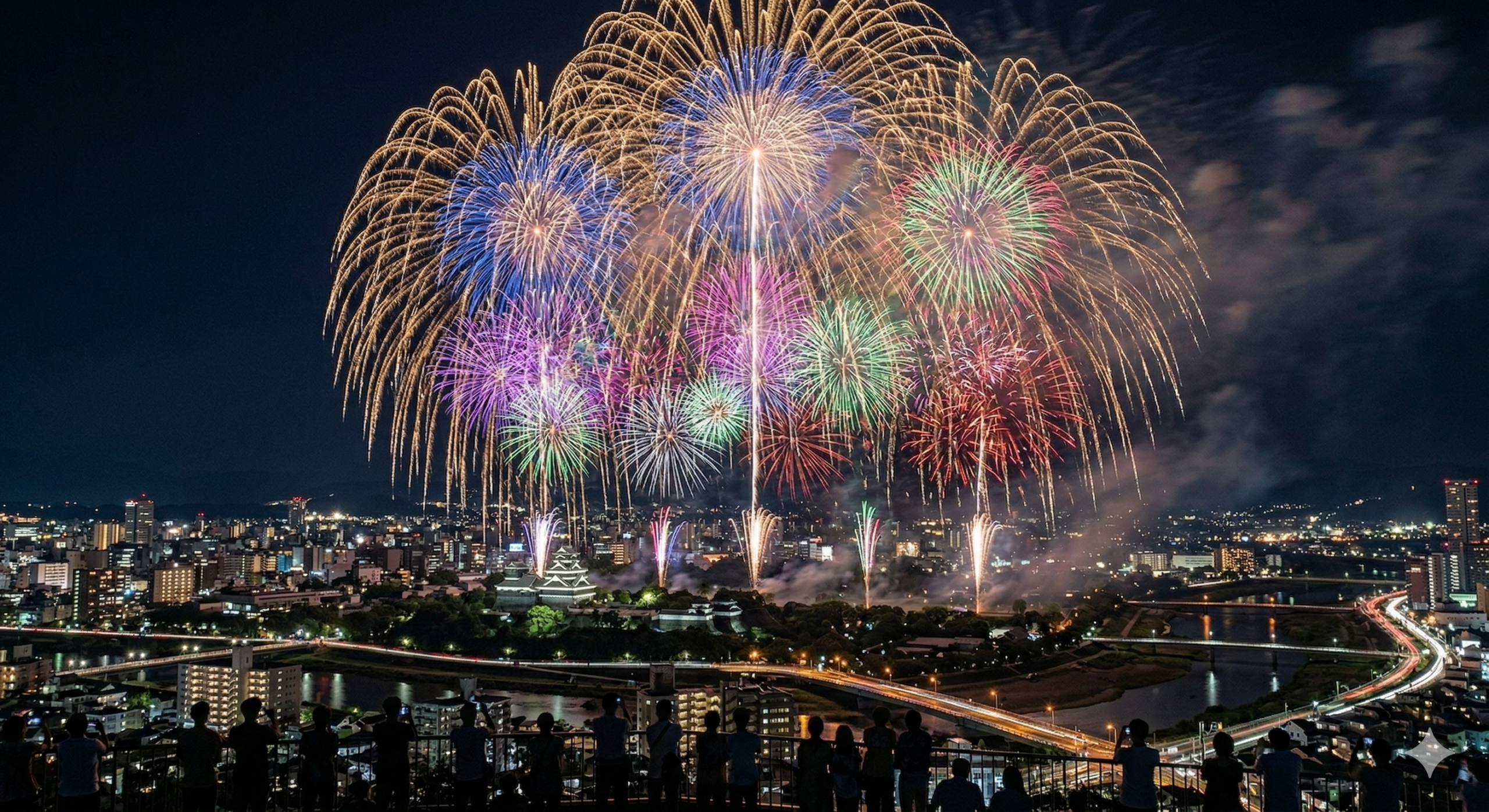
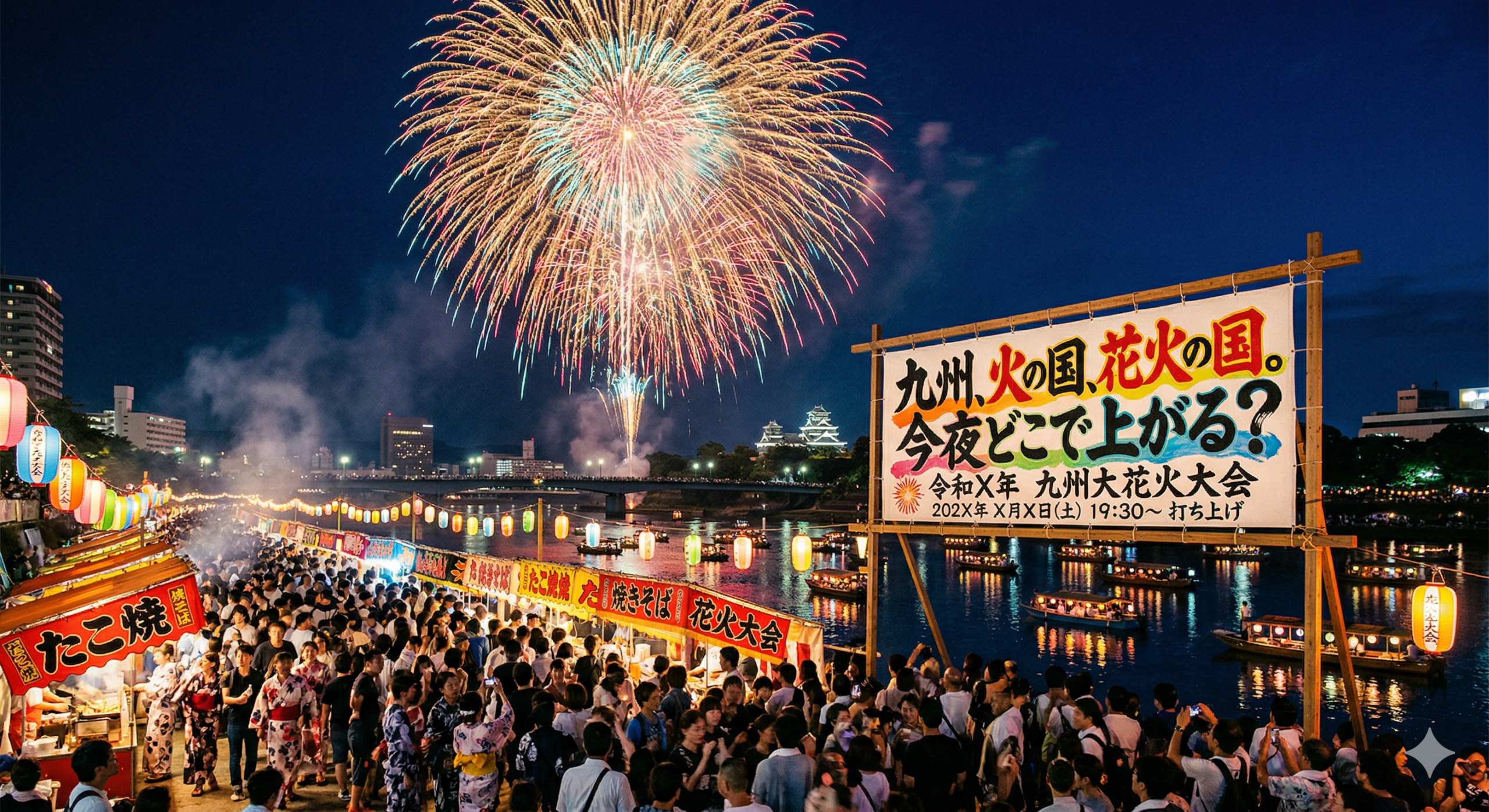
One of the most striking things about attending a Japanese fireworks festival (花火大会, hanabi taikai) is how many people show up in yukata — the lightweight summer kimono. It’s entirely optional, but wearing one is one of the more memorable things you can do at a summer festival in Japan. Here’s what to know.
What is a yukata?
A yukata (浴衣) is a casual, unlined cotton or synthetic kimono worn in summer. Unlike a formal kimono, it doesn’t require multiple undergarments or a specialist to put it on. It’s essentially Japan’s summer festival outfit — seen at fireworks shows, Obon dances, and ryokan (Japanese inn) evenings.
Choosing a yukata
Yukata come in a huge range of patterns and colours. Common motifs include:
- Morning glory (asagao) — one of the most classic summer patterns
- Goldfish (kingyo) — very traditional, associated with summer festivals
- Hydrangea (ajisai) — popular for its cool blue tones
- Geometric patterns (kikko, seigaiha) — timeless and versatile
For colour, cooler tones (navy, indigo, lavender) read as more elegant; brighter colours (coral, red, yellow) are more festive. Pick what suits you — there’s no wrong answer.
Where to rent or buy one
If you’re a visitor, renting is the easiest option. Many areas near major festivals and tourist districts offer yukata rental sets (yukata + obi + sandals + bag) for around ¥3,000–¥8,000 per person, often including dressing assistance. Search for 浴衣レンタル (yukata rentaru) near your festival location.
You can also buy one at department stores (デパート), specialty kimono shops, and at large shopping centres. Budget ¥3,000–¥15,000 for a basic set; quality varies considerably.
The obi (sash) and how to tie it
The obi is the wide sash that goes around the waist. For yukata, the most common tie is the bunko musubi (bow shape) or cho musubi (butterfly bow). If this is your first time, have the shop staff help you — it’s much easier with someone who knows what they’re doing. Rental shops always include dressing help.
Footwear
Geta (木製下駄, wooden platform sandals) are the traditional choice. They look great but can cause blisters if you’re not used to them — the thong between the toes can rub. Tips:
- Wear them around your accommodation for a few minutes before you head out
- Bring a small roll of blister tape or fabric plasters, just in case
- Tabi socks (split-toe cotton socks) reduce rubbing and are perfectly acceptable
- If geta are unbearable, flat sandals in a neutral colour work fine — comfort matters more than authenticity
Hair and accessories
A simple updo or half-up style works well with a yukata and keeps you cool in the summer heat. Kanzashi (hair ornaments) can be picked up cheaply at variety stores. Keep jewellery minimal — a small bag or handbag, a sensu (folding fan), and uchiwa (flat fan) round out the look.
Practical notes
- Yukata are worn with the left side over the right (right over left is only for the deceased — don’t get it backwards)
- Summer festivals are hot — natural cotton breathes better than synthetics
- Carry a small towel and deodorant; the inside collar of a yukata can get warm quickly
- Bring cash in a small bag or pouch — most festival stalls don’t take cards
Read next
- Fireworks festivals in Fukuoka & Kyushu: a traveler’s guide
- What to bring to a Japanese fireworks festival
- How early to arrive at a Japanese fireworks festival
※本記事はアフィリエイト広告(楽天・Amazon)を含みます。
あわせて読みたい
花火カレンダー(全国の花火大会日程まとめ) と 花火マップ(開催地マップ一覧) で、気になる花火大会をまとめてチェックできます。