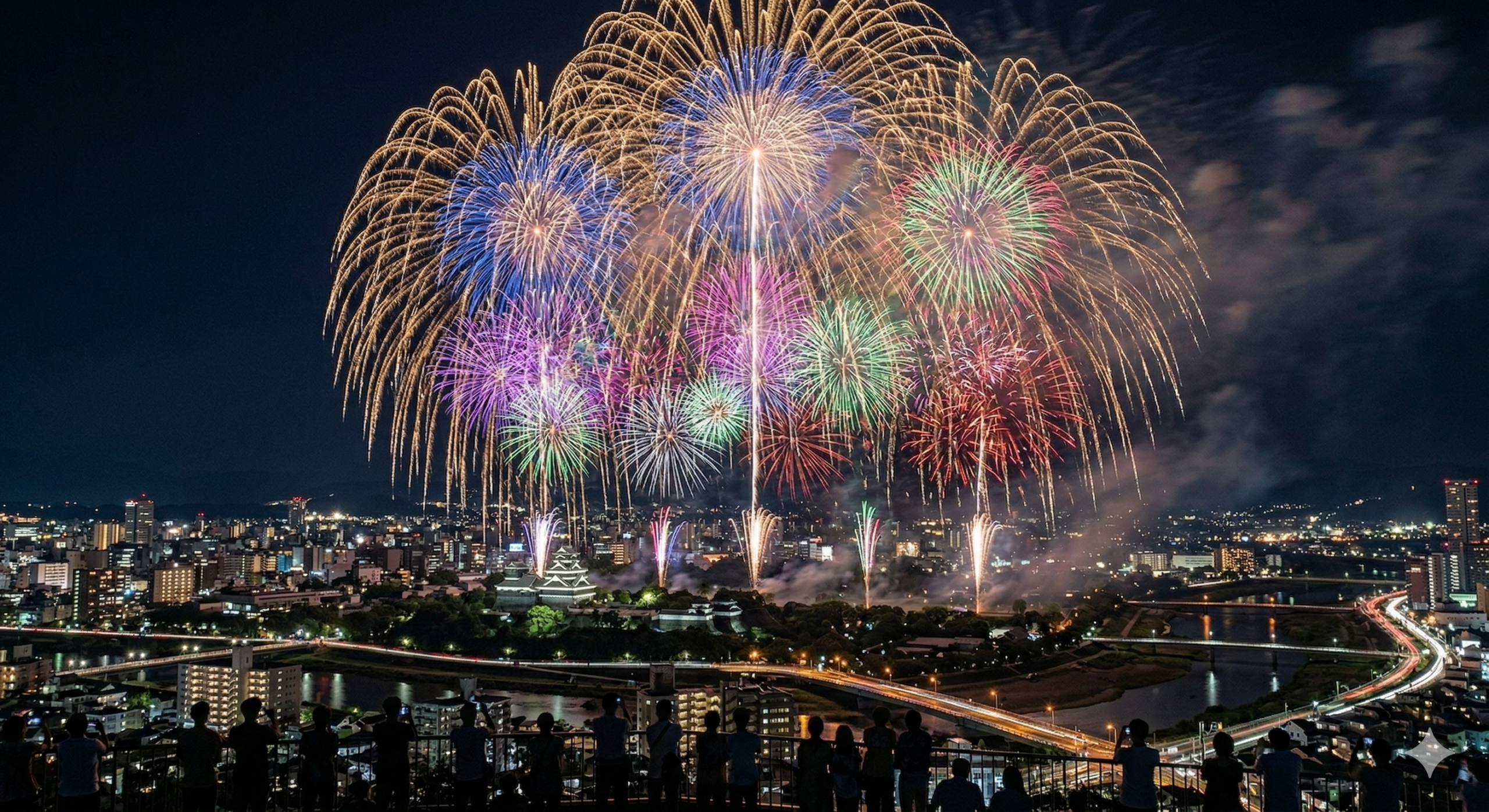
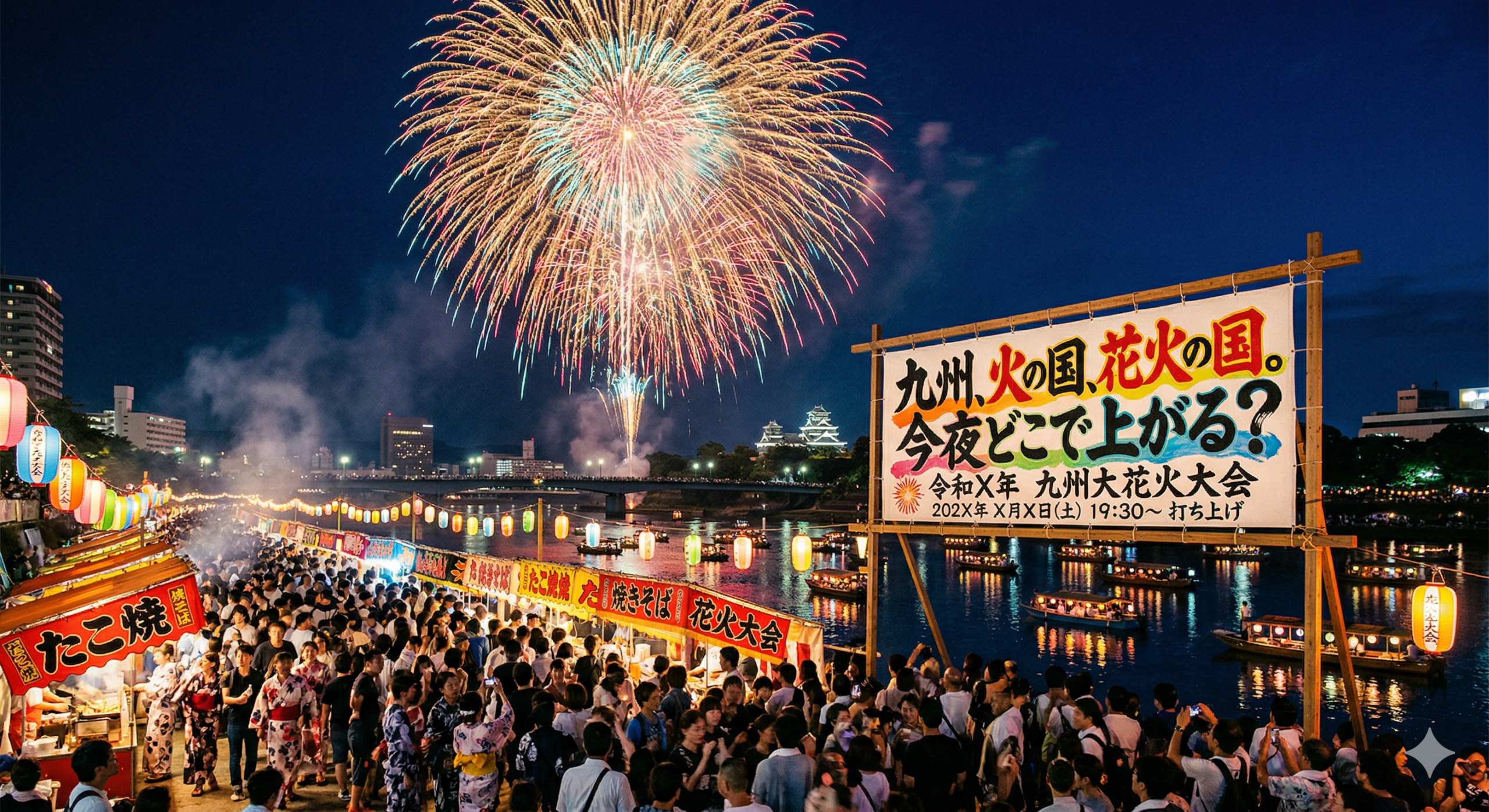
The row of glowing stalls — yatai (屋台) — is as much a part of a Japanese fireworks festival as the fireworks themselves. The smells hit you before you see the lights: grilling meat, frying batter, caramelised sugar. Here’s what you’ll find and what’s worth eating.
The classics
Yakisoba (焼きそば) — fried noodles
The quintessential festival food. Thick wheat noodles stir-fried on an iron plate with cabbage, pork, and Worcester-style sauce. Almost every festival has at least one yakisoba stall. The smoky, slightly charred version from a well-seasoned iron plate is much better than the supermarket version — don’t skip it.
Takoyaki (たこ焼き) — octopus balls
Round batter balls with a chunk of octopus inside, cooked in a special moulded iron pan and topped with takoyaki sauce, mayo, bonito flakes, and dried seaweed. Osaka’s most famous export. The outside should be slightly crisp; the inside molten-soft. Eat carefully — they stay hot for a long time.
Karaage (唐揚げ) — fried chicken
Japanese-style fried chicken: bite-size pieces marinated in soy, ginger, and garlic, then fried in a light coating. Usually served with lemon. Crispy outside, juicy inside. One of the best walking foods at a festival.
Corn on the cob (焼きとうもろこし)
Grilled over charcoal and basted with soy sauce butter. Simple and perfect. The charred soy flavour is distinctly Japanese — different from anything you’d get elsewhere.
Choco banana (チョコバナナ)
A whole banana on a stick dipped in chocolate and decorated with sprinkles. A classic matsuri sight — more nostalgic than gourmet, but required for the full experience.
Ringo ame (りんご飴) — candy apple
A whole apple (sometimes a strawberry or grape cluster) coated in a hard red sugar candy shell. Shiny, photogenic, very sweet. More for the aesthetic than the eating — but it photographs beautifully.
Drinks
Super Dry or other canned beer is sold at most festivals. Ramune (ラムネ), the old-fashioned Japanese lemonade in a glass bottle with a marble stopper, is a summer staple — the marble trick is part of the fun. Kakigori (かき氷), shaved ice with flavoured syrup, is the best thing to have while you’re waiting in the summer heat.
Newer trends
Recent years have brought more variety to festival stalls: Turkish ice cream (where the vendor tricks you with long tongs), Thai-style mango sticky rice, loaded fries, and Taiwanese-style scallion pancakes. Larger festivals in cities often have a more diverse food court alongside the traditional stalls.
Tips for eating at yatai
- Cash only — almost universally. Have small bills (¥500 and ¥1,000).
- Prices are higher than convenience stores — ¥500–¥1,000 per item is typical.
- Buy early in the evening; popular stalls sell out by the time the fireworks start.
- Look for the stalls with the longest queues — usually worth the wait.
- Bins are rare at Japanese festivals — carry a plastic bag for wrappers.
Read next
- Fireworks festivals in Fukuoka & Kyushu: a traveler’s guide
- What to bring to a Japanese fireworks festival
- How early to arrive at a Japanese fireworks festival
※本記事はアフィリエイト広告(楽天・Amazon)を含みます。
あわせて読みたい
花火カレンダー(全国の花火大会日程まとめ) と 花火マップ(開催地マップ一覧) で、気になる花火大会をまとめてチェックできます。