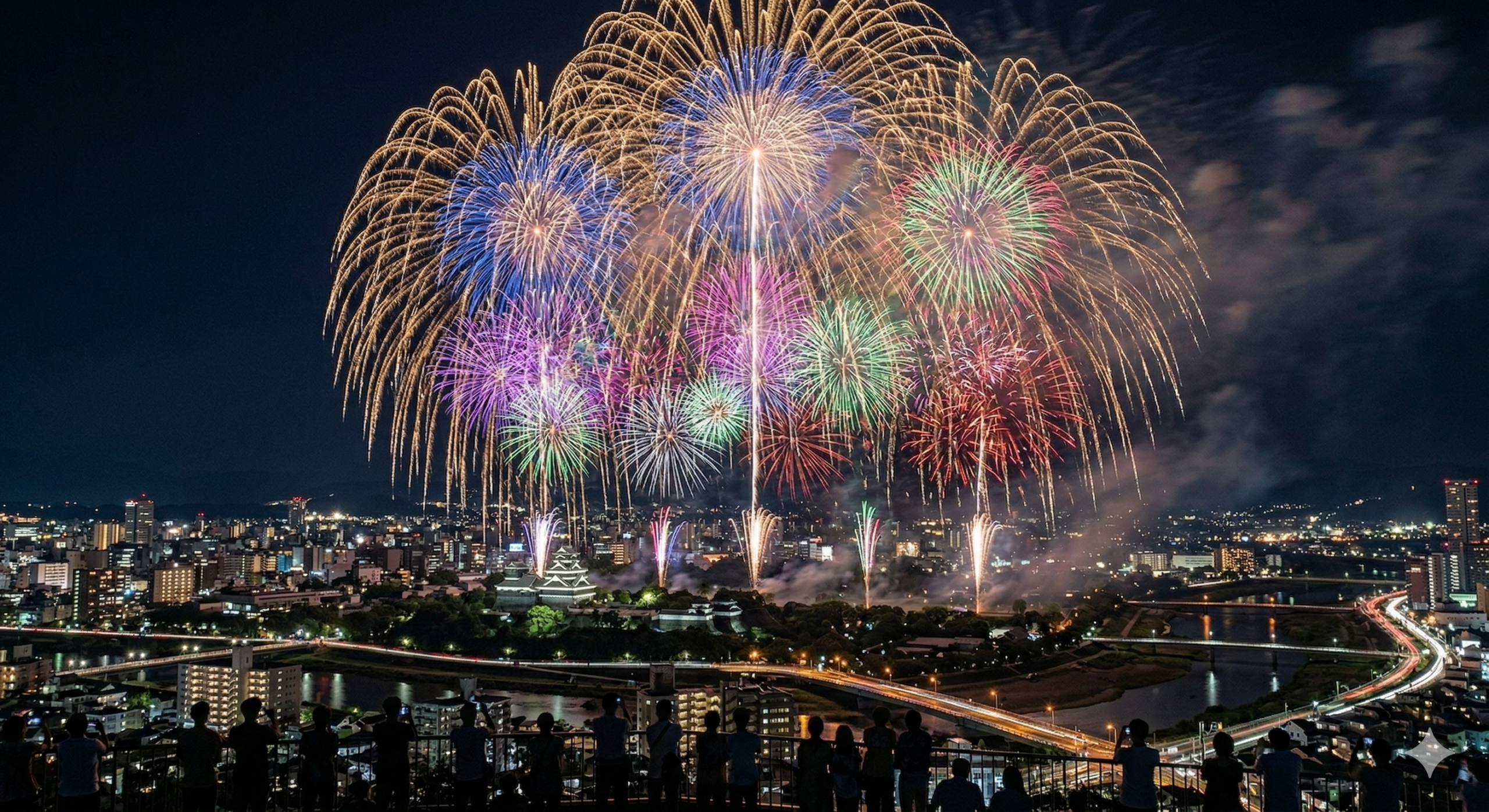
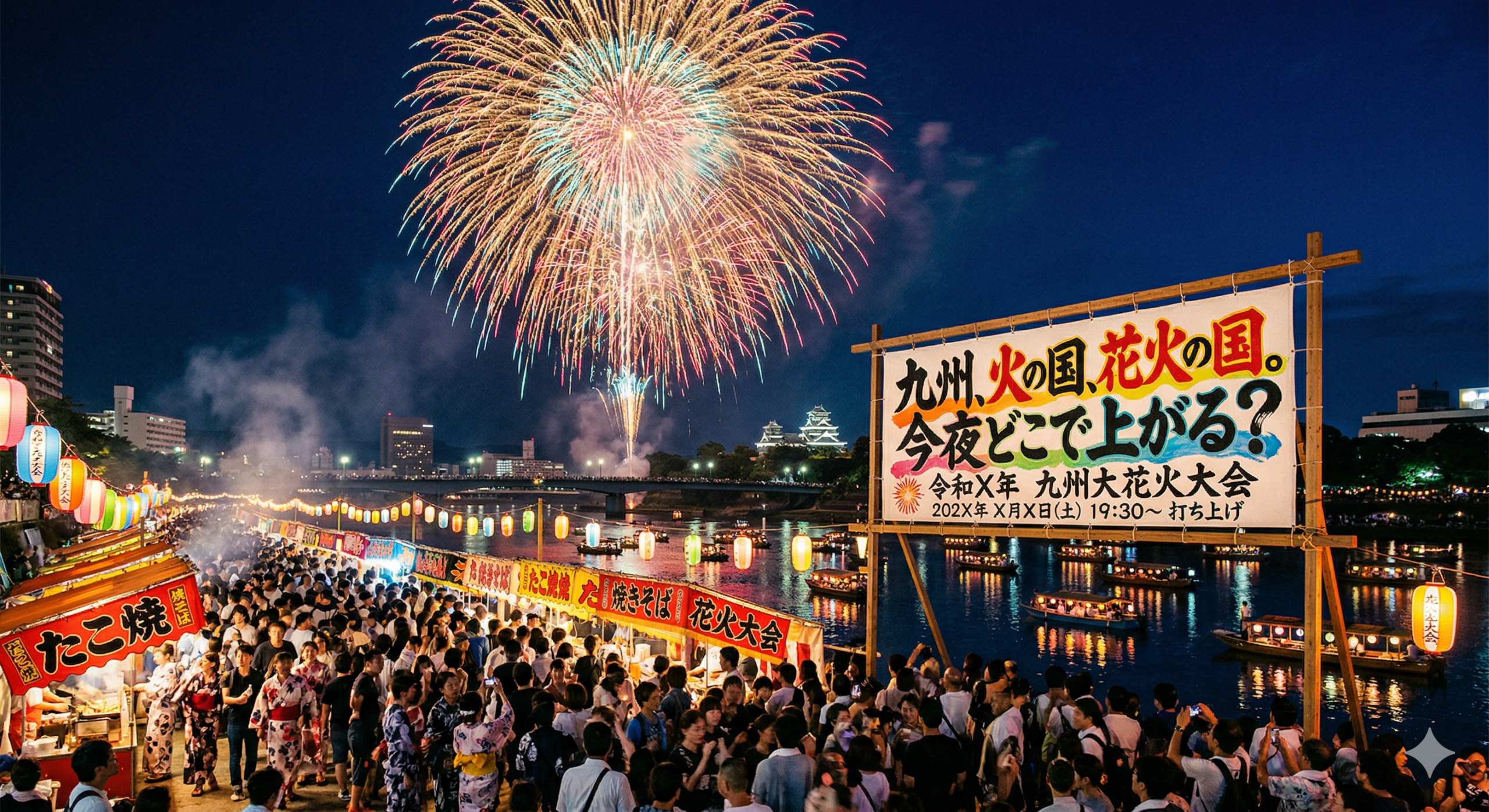
If you attend a Japanese fireworks festival, you’ll hear it: a voice in the crowd shouting 「たまや〜!」(Tamaya!) as a shell bursts overhead. It sounds like a spontaneous cheer, but it’s actually a tradition with over 200 years of history behind it.
Where “Tamaya” comes from
In Edo-period Japan (17th–19th century), fireworks were dominated by two rival pyrotechnic families: Tamaya (玉屋) and Kagiya (鍵屋). They competed at the famous Ryogoku fireworks on the Sumida River — the event that became the ancestor of today’s Sumidagawa Fireworks Festival in Tokyo.
Audiences watching from the riverbanks would shout the name of the maker whose shell they admired: “Tamaya!” or “Kagiya!”. It was partisan cheering — like calling out a player’s name at a sports event.
The Tamaya family was eventually dissolved (there was a fire incident), but Tamaya had become such a crowd favourite that the cheer outlasted the family itself. Kagiya technically won — they’re still operating today, one of Japan’s oldest pyrotechnic houses — but Tamaya is the one people still shout.
What it means now
Today, shouting “Tamaya!” at a fireworks show is a way of expressing appreciation — like calling out “bravo” at a performance. It’s nostalgic and slightly theatrical, and people do it with a kind of self-aware good humour. You’ll hear it at traditional festivals and at newer events too.
You can absolutely shout it yourself. It’s appreciated rather than seen as strange coming from a visitor. The reaction is usually smiles.
Japanese fireworks vs. fireworks elsewhere
The Tamaya/Kagiya tradition hints at something different about how Japanese people relate to fireworks. In Japan, fireworks are closely connected to Buddhist memorial culture — the first large-scale Edo fireworks were said to be launched to comfort the spirits of those who died in famine and plague. The spectacle and the mourning were intertwined.
This gives Japanese fireworks a slightly different emotional register than the purely celebratory fireworks of New Year’s or national holidays elsewhere. Even today, summer fireworks in Japan coincide with Obon — the period when ancestral spirits are said to return. The atmosphere at a fireworks show can feel genuinely moving, not just impressive.
The craft side
Japanese fireworks makers (花火師, hanabi-shi) still operate as craft artisans, and competitive fireworks festivals (花火競技大会) exist specifically to judge the technical skill of individual makers. The classic round Nihomalgi (日本丸型) shell — perfectly spherical, symmetrical in every direction — is considered one of the hardest things in pyrotechnics to make correctly.
When you see that perfect circle hang in the sky for a moment before the stars fall, you’re watching the result of a tradition that goes back centuries and involves techniques still passed down within families.
One thing to listen for
The deep boom of a large shell — felt in the chest before you hear it — is called the dondoko sound. It’s one of the things that can’t be replicated by watching video. If you’re close enough to feel it, you’ll understand why people travel hours to attend these festivals.
Read next
- Fireworks festivals in Fukuoka & Kyushu: a traveler’s guide
- What to bring to a Japanese fireworks festival
- How early to arrive at a Japanese fireworks festival
※本記事はアフィリエイト広告(楽天・Amazon)を含みます。
あわせて読みたい
花火カレンダー(全国の花火大会日程まとめ) と 花火マップ(開催地マップ一覧) で、気になる花火大会をまとめてチェックできます。